Loading...
Administrator
11 Nov 2025
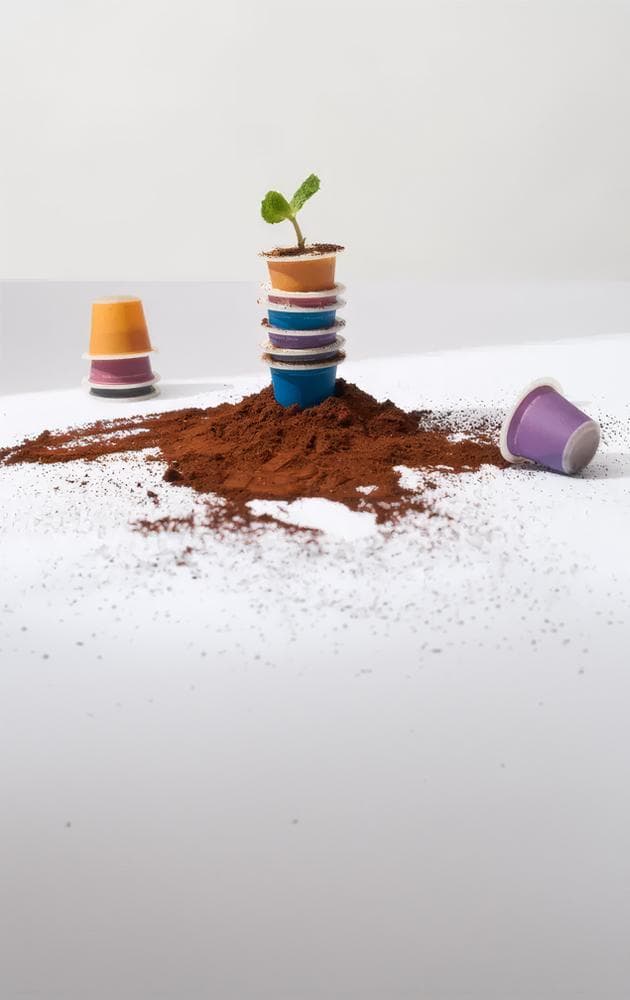
To ensure that our coffee capsule customers can enjoy a cup of Tanamera, guilt-free, we use the world's first bio-based capsule, certified for both home and industrial composting, degrading in 26 weeks. Utilising this sustainable innovation means balancing convenience with a clear conscience.
Coffee capsule machines, also known as single-serve coffee machines, are a steadily growing market globally, with consumers attracted to the convenience of an easy-to-make espresso, whether at home or in their business. Market research estimates tens of billions of coffee pods are sold every year, with the market valued at US$ 91 billion in 2024, and projected to grow at a CAGR of 5.32% by 2030 (Grand View Research).
This growing popularity is certainly reflected in Indonesia and Southeast Asia, where households, offices and even the hospitality industry have adopted using single-serve machines – they are now a mainstay from corporate buildings in the capital to the guest rooms of luxury Bali resorts. As it is our mission to champion Indonesia's specialty coffee, we felt it was imperative to make Tanamera available for a diverse range of preparation methods, including coffee capsule machines.
Despite their popularity, the coffee pod and capsule industry is rife with environmental issues. The global footprint of annual coffee capsule waste is said to be around 576,000 metric tons — the combined weight of about 4,400 school buses (mongabay.com). It takes an estimated 500 years for a plastic coffee pod to degrade in a landfill, and this does not account for the potential greenhouse gases emitted by the decomposing coffee grounds still inside each capsule.
Even with recycling campaigns run by major companies, the recycling rate was estimated at a best-case scenario of 32%, many falling below this number, and even then, the cost and energy expenditure of separating coffee and capsule, then processing the material, would negate the potential environmental benefits. In 2016, the city of Hamburg, Germany, outright banned coffee pod-use, seeing the efforts to manage environmental impacts effectively not worth the intended outcome.
As such, at Tanamera Coffee Indonesia, we wanted to enter this growing market but not at the cost of the environment, which put us on the search for the most sustainable coffee capsule option available – this led us to Capsul'in Zero Impact.
This is the world's first biobased coffee capsule, developed by the highly-innovative, Luxembourg-based company, Capsul'in Pro. The Nespresso-compatible capsules are made from renewable plant-based materials (4-stars OK biobased certified by TÜV Austria), with no GMO, PLA, aluminium, or fossil fuel-derived plastic.